

Network Security in Cloud
In this day and age, when data is the new currency, it’s a no-brainer that security is the crux of the day to day functioning of any enterprise. With IT industries heavily relying on information and data via cloud computing, and being in one way or the other interlinked with different sectors,
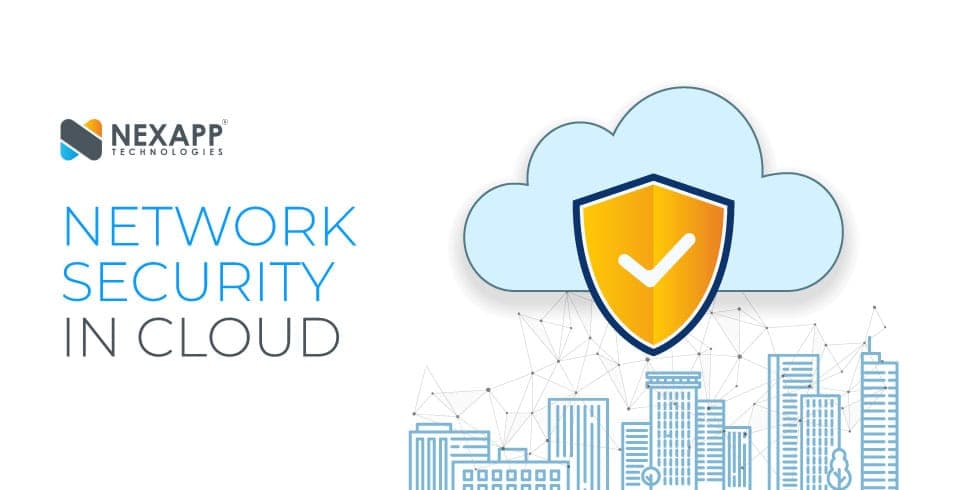
Short answer: Cloud network security protects data, applications and users once they are spread across multiple clouds and locations. Its core components are micro-segmentation of zones, workloads and applications with firewalls, control of traffic flows down to the user level, and end-to-end transport encryption, increasingly delivered through SASE and SD-WAN.
In this day and age, when data is the new currency, it’s a no-brainer that security is the crux of the day to day functioning of any enterprise. With IT industries heavily relying on information and data via cloud computing, and being in one way or the other interlinked with different sectors, network security is something that cannot be compromised on.
To get a better understanding of this, let’s deep dive into what network security is, the role it plays in the cloud.
What is network security?
A subgroup of networking, network security is the operation of data protection, management of devices, applications and systems connected to the network. Securing the connected infrastructure from the core. Protecting data, intellectual property, systems and networks from cyber-attacks are essential for maintaining the viability of any modern business.
When enterprises make the shift from MPLS to multi-cloud environments, the data, devices and applications are dispersed across locations. During this, users require access to the data from any device, the zero trust approach to security plays a part here, wherein the organization verifies access, in turn strengthening the enterprise security.
How does network security work in the cloud?
The cloud is no longer an emerging trend; the phase of cloud being the new thing is a matter of the past. Today, the cloud is right in the middle of digital transformation. Making organizations and enterprises rethink and shape privacy and security.
Securing network and cloud security is not the same thing. Cloud network security comprises of major components that need to be kept in mind –
- Micro segmentation or isolation of zones, workloads, and applications using layers of firewall
- Network traffic control flows down to the user level
- Applications need to use end-to-end transport level encryption
Network security is of the utmost importance to the success of any company, regardless of size. As the adoption of public cloud services grows, security, governance and compliance become a major source of concern. Companies are looking for new ways to keep up with the ever-changing IT landscape and move their networks into the cloud. Along with protecting data and business content. While this transition is still a work in progress for many IT firms, some have already started to leverage the benefits of cloud computing to serve their customers better.
Some of the benefits of cloud computing are as follows –
- Lower upfront costs
- Reduced operational and administrative expenses
- Increased reliability and availability
- Centralized security
- Greater ease of scaling
The Secure Access Service Edge (SASE) and SD-WAN technologies that are incorporated in the cloud network security paradigm enable enterprises to construct networks with self-service controls and security options. Traditional endpoint security services and solutions that analyze network traffic for threats are also included in SASE security services.
The flexibility to deploy IT resources across various sites to construct a safe, global virtualized network topology is one of the benefits of cloud network security. Furthermore, network security configurations and resources are continuously monitored and alerted, which eliminates time-consuming network management activities.
Related: Nexapp SASE platform capabilities, Nexapp SSE and ZTNA and SASE vs SD-WAN vs SSE.
Frequently asked questions
What is network security?
Network security is the protection of data and the management of the devices, applications and systems connected to a network, so that data, intellectual property and systems are safe from cyber-attacks.
How is cloud network security different from traditional network security?
Traditional network security protects a fixed perimeter, while cloud network security protects data and applications spread across several clouds and locations, verifying each user's access from any device instead of trusting the network they are on.
What are the main components of cloud network security?
The core components are micro-segmentation or isolation of zones, workloads and applications with layers of firewall, control of traffic flows down to the user level, and end-to-end transport-level encryption for applications.
How do SASE and SD-WAN secure cloud networks?
SASE and SD-WAN let enterprises build networks with centrally controlled security, continuous monitoring and alerts, and threat inspection of traffic. Nexapp's SASE platform includes FWaaS, SWG, CASB, DLP, ZTNA and DNS security under one policy engine.
Can Nexapp's security platform be hosted in India?
Yes. Nexapp's platform can be hosted by Nexapp in India or self-hosted by the customer.
Network security is essential for developing comprehensive cloud security. To find out more on network security in the cloud, see Nexapp platform capabilities.
Related guides

Benefits of ZTNA for Business: Security to Cost | Nexapp
ZTNA checks every user and device before granting least-privilege access to apps. See how it improves security, compliance, remote work and IT costs.

How to Build Connection in a Remote Workplace | Nexapp
How to keep remote and hybrid employees connected: weekly non-work rituals, easier ways to ask for support and real time to recharge, to prevent burnout.
SD-WAN with 4G LTE and 5G: How Hybrid WAN Works | Nexapp
SD-WAN with 4G LTE and 5G combines wired and cellular links so a branch can fail over without downtime, with zero-touch setup and remote management.
Talk to a Nexapp architect about What Is Cloud Network Security? Key Components | Nexapp
24×7 NOC in Pune · 75,000+ devices deployed · 400+ enterprise and banking customers since 2014.