

How is IIoT impacting the global connectivity market?
The day and age in which we live is in a process of constant change. The evolution of human beings to industries has been going on for hundreds of years, and, at the pace at which industrialization and digitization have taken over our lives, we are setting up the stage for a much more advanced
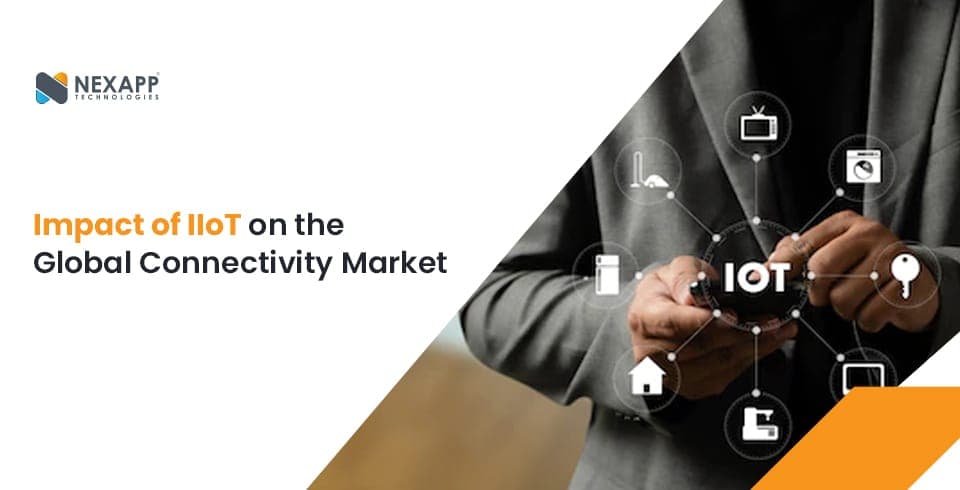
Short answer: IIoT, the industrial branch of IoT, connects sensors, machines and computers so they can send data to cloud systems for monitoring and control. This raises the need for reliable, scalable and secure connectivity at industrial sites. Its adoption depends on five factors: technical feasibility, cost, labour market dynamics, economic benefits and regulatory and social acceptance.
The day and age in which we live is in a process of constant change. The evolution of human beings to industries has been going on for hundreds of years, and, at the pace at which industrialization and digitization have taken over our lives, we are setting up the stage for a much more advanced future.
One such transformation that has taken over everything is Industrial Internet of Things (IIoT). The terms Internet of Things (IoT) and IIoT have become the new age lingo. Everyone you know and see is talking about it, and rightly so. IIoT has become synonymous to not only the manufacturing process, but also is now seen as human race moving towards modernization and industry digitization with respect to efficiency and control.
What is IIoT?
So, after talking in length about how IIoT is the future and humankind is in for digital transformation, let us understand IIoT and its many benefits.
IIoT in simple terms is a subcategory of IoT in the industry sphere. A network of intelligent devices, computers which helps in collecting and sharing vast amount of data. This data is then processed in the central cloud – based systems and is then translated into an understandable human interface for monitoring and control, along with providing information transparency amongst stakeholders and connectedness between machines and people.
We all know and have widely heard that IIoT works towards increasing productivity, which in turn gives businesses a boost. But let us dive a little deeper in understanding the actual value of improved connectivity, efficiency and scalability for industrial organizations. The connectivity of devices to robust cloud run platforms offers greater transparency, allowing operators to make better decisions from various perspectives – like procurement teams and get early maintenance notifications ensuring the machines run for a longer period. All this leads to business owners and stakeholders to make informed decisions and act instantly upon the metrics that are available.
To understand better how IIoT impacts the global market, today there are many technologies that play a major role in enabling IIoT. Apart from the already discussed sensors and data analytics, the latest technological advancements are much broader and range from various industrial challenges. The availability of cost-effective communication like Bluetooth and Wi-Fi have made communications dependable as well as easy to scale.
The industrial revolution or this change that we have been talking about has not happened overnight. Over many years and with a number of revolutions witnessed by humankind, but with IIoT and automation, it is noticed that 5 key factors have drastically influenced the pace and the extent to which it has been adopted. These are –
- Technical Feasibility
- Cost of developing and deploying solutions
- Labor market dynamics
- Economic benefits
- Regulatory and social acceptance
All the factors together make sure adoption of this technology is taking place. Considering these factors, it is still estimated that it will take decades for the effect of IIoT and automation to fully play out.
How will IIoT and automation affect the economy?
Smart automation and IIoT have brought in a massive change. Not just in reference to technological advancement, but it has also had an impact on the economy at a much larger scale. According to a study conducted by PWC, automation has the potential to contribute up to $15 trillion to global GDP by the year 2030. This in turn paves way for generating a demand for jobs. Further studies show that the pace and extent of automation will impact the workers differently. These will vary across different occupations, activities, wages and skill sets. Activities prevalent to the manufacturing sector or retail trade are getting automated at a much quicker rate as compared to others.
IIoT and automation have wide-ranging effects across geographies as well.
With everyday passing, the industrial internet is getting highly lucrative and competitive. With hundreds of businesses moving to a more sophisticated IIoT platform, they will be spending billions on various IIoT projects, transport and utility. The future is bright and exciting with a lot of innovation, but we also need to keep in mind the many cyber security threats.
Related: IoT and M2M connectivity, networking for manufacturing and industrial 4G router buying guide.
Frequently asked questions
What is the difference between IoT and IIoT?
IIoT is the industrial subset of IoT. It covers networks of sensors, machines and computers in plants and utilities that collect data for monitoring, control and maintenance.
What drives IIoT adoption?
Five factors shape the pace of adoption: technical feasibility, the cost of developing and deploying solutions, labour market dynamics, economic benefits, and regulatory and social acceptance.
What kind of router does an IIoT site need?
An industrial router should support the site's field protocols and mounting needs. Nexapp's Instaroute routers support Modbus, DNP3, IEC 60870-5-101/104 and MQTT, with dual-SIM, DIN-rail and IP65 outdoor models.
How do you secure an IIoT network?
Encrypt device-to-cloud traffic, segment industrial devices from office traffic and monitor them continuously. Nexapp offers IoT/OT security on its SASE platform, and its products carry IEC 62443 certification.
Nexapp makes devices that overcome connectivity challenges of various complex IIoT projects. To know more, see Nexapp’s IoT and M2M solutions.
Related guides
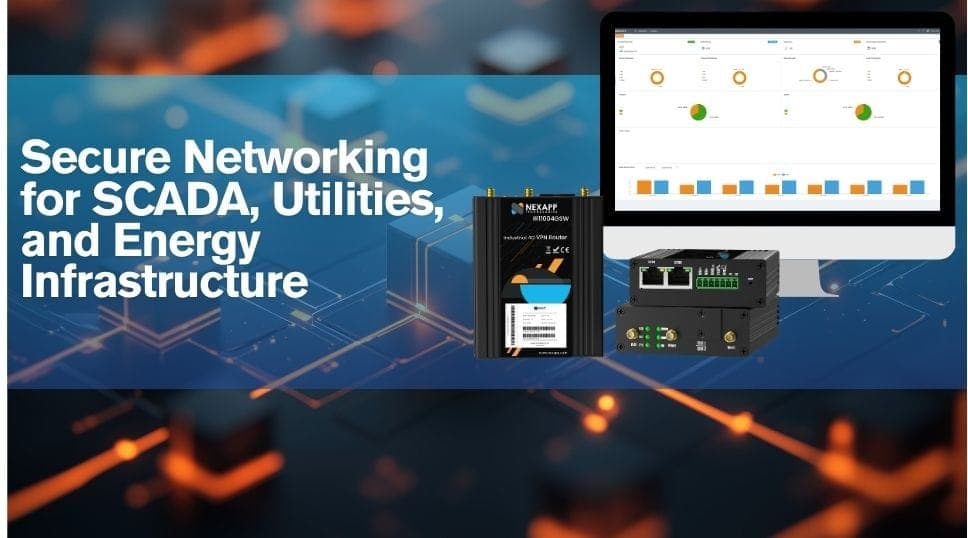
Secure SCADA Networking with a 4G/5G IoT Gateway | Nexapp
How an industrial 4G/5G IoT gateway secures SCADA and utility sites: IPsec tunnels, IEC 104, DNP3 and Modbus, OT/IT segmentation and DIN-rail design.
Instaroute SD-WAN Router: 6 Key Features | Nexapp
Nexapp Instaroute SD-WAN router features: dynamic path selection, QoS, application-aware routing with DPI, failover, central control and encryption.
How SD-WAN Supports Digital Transformation | Nexapp
SD-WAN supports digital transformation with central control, application-aware routing, built-in security and faster new-site rollout across MPLS and LTE.
Talk to a Nexapp architect about How IIoT Is Changing Industrial Connectivity | Nexapp
24×7 NOC in Pune · 75,000+ devices deployed · 400+ enterprise and banking customers since 2014.