

How Is 5G Technology Changing Vehicles?
With many countries already adopting the 5G wave, countries like India are clasping hands and awaiting eagerly for this wave to hit us all and bring in the much-needed and much awaited change in the world of technology and networking. There is no denying that 5G will gradually be taking over ar
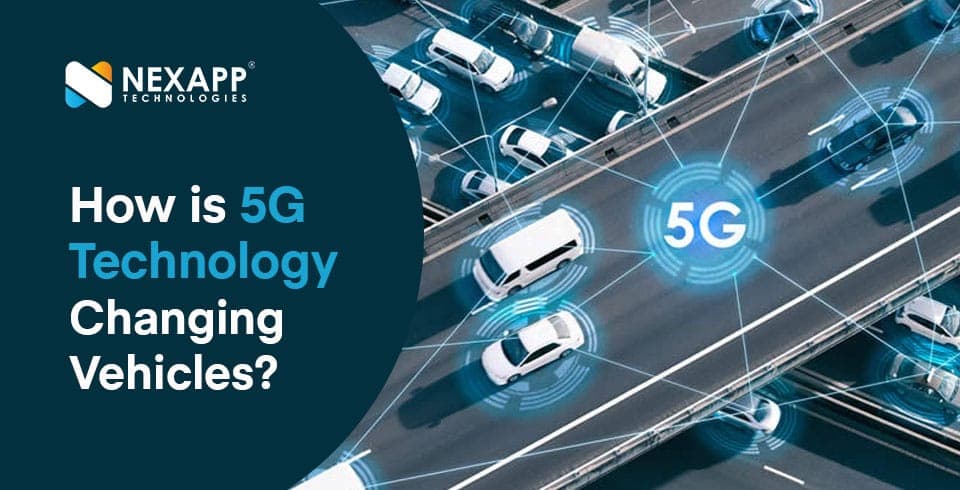
Short answer: 5G gives vehicles lower latency, higher bandwidth and more reliable links than 4G. That supports faster vehicle-to-HQ data, real-time tracking, connected ambulances and, in future, autonomous driving. Network slicing lets critical vehicle traffic travel on its own slice with fewer interruptions.
5G is now live in many countries, including India, and it is bringing a much-awaited change to the world of technology and networking.
There is no denying that 5G will gradually be taking over areas and aspects of businesses that humans at first had never thought of. 5G along with the Internet of Things is a major shift for all. Over the years we have seen transport and vehicles evolve into something much better and way beyond our imaginations.
Across all field of life vehicles have been playing a huge role. From ambulances in the healthcare industry, to buses, trains and flights in the travel and public transport industry. Also including trucks for transporting and police cruisers for constant vigilance. Without vehicles, the day-to-day functioning of all industries will take a step back, hampering businesses.
Thus, it is crucial for any sector to evolve and be updated with the many changes that come. Vehicles are not far behind in this technological advancement. With IoT and everything working on cloud. We are all a part of a huge technological change, which is already shaping what the future looks like.
How does 5G help connected vehicles?
Even though there is still some uncertainty about how 5G connected vehicles will work, the anticipation is high. 5G being the new solution built for a next-gen cellular network, one thing that we are sure of is speed! The term 5G has become synonymous with speed.
Today, we already see that vehicles equipped with internet and wifi have been able to make many changes in its respective fields. With faster tracking and super fast commutes, ambulances connecting medical devices to the hospital, all making work a smoother and a faster process.
What change will 5G bring to vehicles?
We are moving towards a future where vehicles will be autonomous. By this we mean vehicles will be smart and independent while making decisions as well as responding appropriately in times of emergencies. Where the intervention of a driver won’t be required. Making vehicles intelligent on road transport system.
The virtual network levels and short transmission paths support important quality features of the 5G mobile technology, such as low latencies and high bandwidths. Sensors are used to implement car-to-car as well as car-to-HQ communication.
- Higher data speed and increased reliability for better remote control – Higher speed and increased reliability increases the likelihood of vehicles to being able to respond to situations at a faster rate as compared to when enabled with 4G connection. Making tracking, sending and receiving information from on the road to the HQ more accurate and on time.
- Processing and storage of data – Data centers that are in close proximity to the transport routes are able to process and store data at a secure and a much faster rate. The virtual network levels and shorter transmission paths support low latencies and higher bandwidths with 5G connectivity.
- Network Slicing – Network slicing with 5G connectivity ensures safety and relevant information to be sent, which means fewer interruptions to the vehicles on the road.
5G is changing the way we perceive vehicles, and in future it could make driving more autonomous and independent. We are excited to see the changes that the networking world will witness.
Related: 5G wireless SD-WAN, IoT and M2M connectivity and Instaroute 4G and 5G routers.
Frequently asked questions
How does 5G help connected vehicles?
5G offers lower latency and higher bandwidth than 4G, so vehicles can send and receive data from headquarters faster and more reliably. This improves tracking, remote control and emergency response.
What is network slicing in 5G?
Network slicing divides one 5G network into separate virtual networks, each tuned for a specific use. Vehicle safety data can run on its own slice so it is not slowed by other traffic.
Why does low latency matter for vehicles?
Low latency means data reaches its destination with very little delay. For vehicles, this lets systems respond to road situations and remote commands more quickly than on 4G.
Can fleet vehicles use 5G routers?
Yes. Cellular routers with 5G support can connect a vehicle's devices to the cloud or head office. Nexapp's Instaroute Enterprise X Series includes 5G SA/NSA models with dual-SIM support.
To read more about 5G for business networks, see 5G wireless SD-WAN from Nexapp.
Related guides
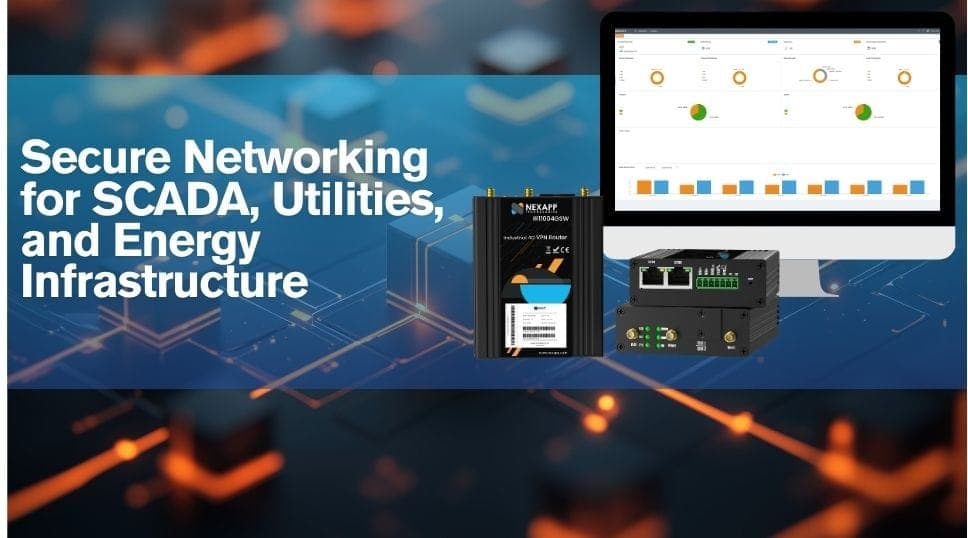
Secure SCADA Networking with a 4G/5G IoT Gateway | Nexapp
How an industrial 4G/5G IoT gateway secures SCADA and utility sites: IPsec tunnels, IEC 104, DNP3 and Modbus, OT/IT segmentation and DIN-rail design.

SD-WAN Trends: SASE, AI, Multi-Cloud and Edge | Nexapp
Four trends shaping SD-WAN: convergence with SASE, AI-driven automation, multi-cloud connectivity and edge computing, and what each means for your network.
What Does a Modern Branch Network Need? | Nexapp
A modern branch network needs simple central management, diverse WAN links including 4G/5G, SD-WAN traffic steering and layered zero trust security.
Talk to a Nexapp architect about How Is 5G Changing Vehicles? Connected Vehicle Uses | Nexapp
24×7 NOC in Pune · 75,000+ devices deployed · 400+ enterprise and banking customers since 2014.